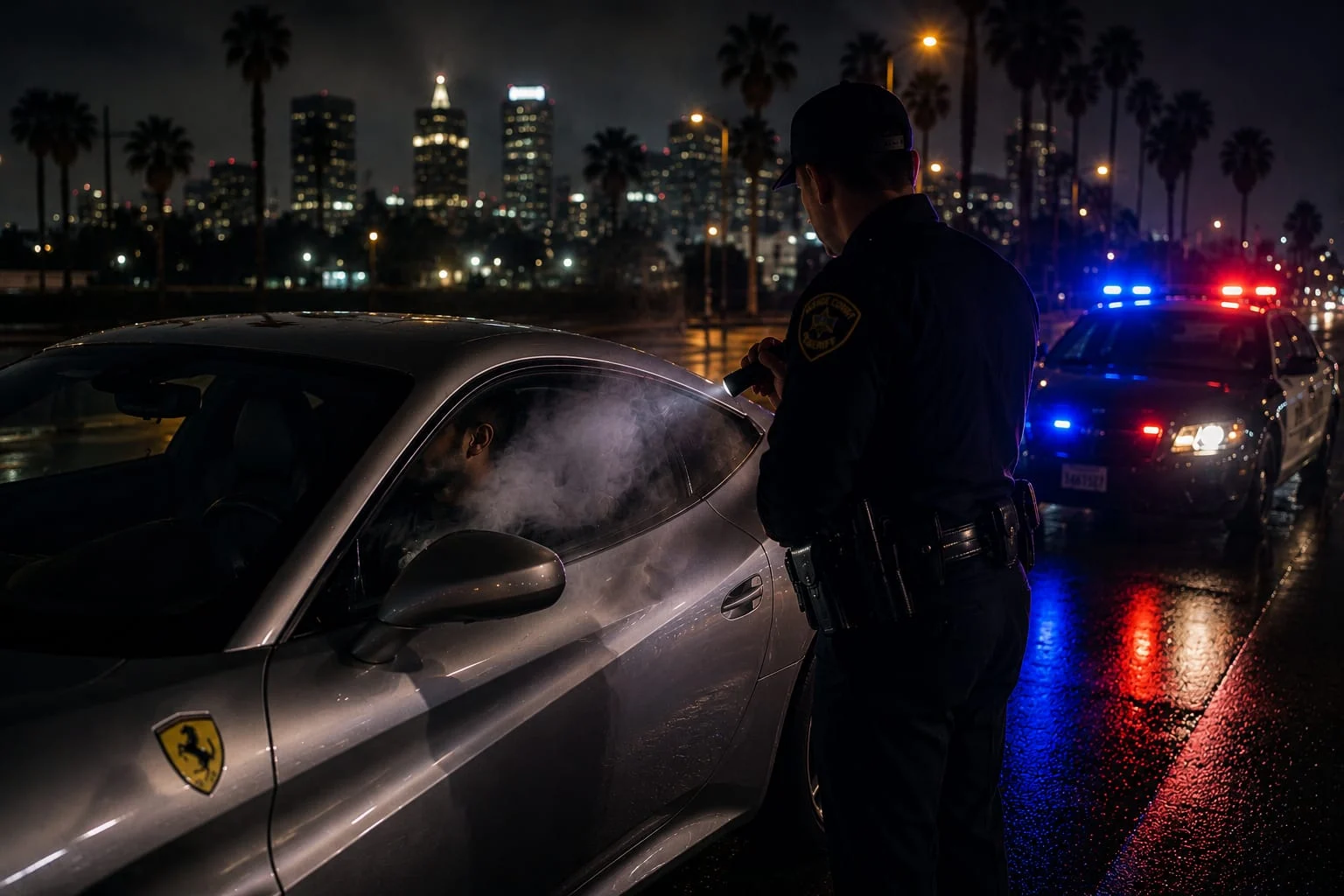

Dillon Brooks DUI Arrest – Quick Overview: Phoenix Suns forward Dillon Brooks was reportedly arrested for DUI in Scottsdale, Arizona early Friday morning. Initial reports and police body camera footage released by media outlets suggest the investigation may have involved suspicion of marijuana impairment rather than alcohol.
The reported Dillon Brooks DUI arrest quickly drew national attention as outlets including TMZ and regional news organizations reported that the NBA player was taken into custody during a late-night traffic stop.
While celebrity DUI arrests often generate major headlines, the legal issues involved typically mirror the same investigative process seen in other DUI cases involving traffic stops, field sobriety testing, and chemical testing.
If you are searching for a DUI Lawyer Orange County drivers trust, it is important to understand that an arrest is not the same as a conviction. In any DUI case, the evidence, the legality of the stop, and the procedures used by law enforcement all matter.
Richard Wagner is a former DUI prosecutor and Orange County DUI defense attorney who represents clients facing DUI charges throughout Irvine and Orange County. His site also includes analysis of other high-profile DUI stories on the Celebrities With DUI Charges page.
Key Takeaway: Reports involving celebrities and professional athletes may attract major media attention, but the underlying legal process is often the same one faced by other drivers accused of DUI. What matters most in any DUI case is the evidence.
Dillon Brooks DUI Arrest Reported in Scottsdale
The reported Dillon Brooks DUI arrest quickly became a trending topic across sports and news media.
Several reports, including early coverage from TMZ, indicated the arrest occurred in Scottsdale early Friday morning.
According to reports, Scottsdale police stopped Brooks shortly after 1:00 a.m. and conducted a DUI investigation that included field sobriety testing.
Body camera footage later released from the incident reportedly shows Brooks blowing a 0.00 breathalyzer reading, indicating no alcohol was detected.
Officers reportedly noted the odor of marijuana coming from the vehicle, which may have shifted the investigation toward suspected drug impairment.
Body Camera Footage of the Dillon Brooks DUI Arrest
TMZ later released police body camera footage connected to the Dillon Brooks DUI arrest investigation in Scottsdale. The footage shows officers conducting field sobriety testing and discussing observations that led to the arrest.
Videos like this sometimes become part of the public record in DUI investigations. However, video clips alone rarely tell the full legal story. Investigators, prosecutors, and defense attorneys must still evaluate the legality of the stop, the testing procedures used, and whether the evidence meets the legal standard required for a conviction.
Possible Marijuana DUI Investigation
Based on early reporting and the released bodycam footage, the investigation may have involved suspicion of marijuana impairment rather than alcohol.
Unlike alcohol DUI cases, marijuana DUI investigations can be significantly more complicated. Alcohol impairment is typically measured using blood alcohol concentration (BAC) levels. Marijuana impairment, however, does not have a universally accepted legal limit.
Instead, officers typically rely on multiple observations and investigative steps when evaluating possible drug impairment, including:
- Driving behavior prior to the stop
- Officer observations of impairment
- Field sobriety testing
- Statements from the driver
- Drug Recognition Expert (DRE) evaluations
- Blood testing for THC
However, the presence of THC in a driver’s system does not necessarily prove impairment at the time of driving. Because THC can remain detectable long after consumption, marijuana DUI cases often involve complex scientific and legal issues.
You can learn more about how these cases are investigated on our Marijuana DUI Defense page.
California Marijuana DUI Law (Vehicle Code §23152(f))
In California, driving under the influence of drugs — including marijuana — is illegal under California Vehicle Code §23152(f).
This statute makes it unlawful for a person to drive a vehicle while under the influence of any drug that impairs their ability to operate a vehicle safely.
Unlike alcohol DUI laws that rely heavily on BAC levels, drug DUI cases typically rely on officer observations, field sobriety testing, and toxicology evidence.
Evidence examined in marijuana DUI cases may include:
- Driving behavior
- Officer observations
- Field sobriety test performance
- Drug Recognition Expert evaluations
- Toxicology results
Because marijuana impairment can be difficult to quantify, these cases are frequently challenged in court.
Who Is Dillon Brooks?
Dillon Brooks is a professional basketball player currently associated with the Phoenix Suns and known for his defensive playing style and competitive intensity.
Brooks previously played for the Memphis Grizzlies before joining the Phoenix Suns and has become a recognizable figure in the NBA.
Why Celebrity DUI Cases Get So Much Attention
Celebrity DUI arrests often generate intense media coverage because the individuals involved are already public figures.
From a legal standpoint, however, the investigative process usually follows the same framework seen in any DUI case:
- Traffic stop or police contact
- Officer observations
- Field sobriety testing
- Chemical testing
- Booking and release procedures
- Court proceedings
Our Celebrities With DUI Charges page examines how high-profile DUI cases often follow the same legal framework as other DUI investigations.
An Arrest Is Not the Same as a Conviction
One of the most important things to understand in any DUI case is that an arrest does not automatically mean guilt.
- Whether the traffic stop was lawful
- Whether field sobriety tests were administered properly
- The reliability of chemical testing
- Whether constitutional rights were respected
These issues can significantly impact whether charges are filed, reduced, negotiated, or challenged in court.
Orange County DUI and Marijuana DUI Defense Guidance
If you were arrested for DUI in Orange County — including allegations involving alcohol, marijuana, or other drugs — it is important to speak with an experienced DUI Lawyer Orange County as soon as possible.
Marijuana DUI cases are often prosecuted under California Vehicle Code §23152(f), which prohibits driving while impaired by drugs.
Richard Wagner
Former DUI Prosecutor
Orange County DUI Defense Attorney
Call: (714) 721-4423
DUI Defense Resource Center
Understanding DUI law can be complicated. The following resources explain how DUI investigations, penalties, and defense strategies work in California.
- DUI Lawyer Orange County
Former prosecutor Richard Wagner represents clients facing DUI charges throughout Irvine and Orange County. - First Offense DUI
Learn about penalties, license suspension risks, and defense strategies for a first DUI arrest in California. - Second DUI Offense
Understand the increased penalties and legal consequences associated with repeat DUI charges. - Third DUI Offense
Third DUI offenses can involve mandatory jail exposure and long-term license consequences. - Marijuana DUI Defense
Learn how marijuana DUI investigations work and why drug DUI cases can be more complex than alcohol-related cases. - Celebrities With DUI Charges
See how high-profile DUI cases involving celebrities and athletes often reflect the same legal process faced by everyday drivers.
Frequently Asked Questions
Was Dillon Brooks convicted of DUI?
No. Current reporting describes an arrest, not a final court outcome.
Why are marijuana DUI cases more complex?
Unlike alcohol DUI cases, marijuana impairment does not have a clearly defined legal limit, making these cases more scientifically and legally complicated.
Where can I learn more about DUI defense?
You can review our pages on DUI First Offense, DUI Second Offense, DUI Third Offense, and Marijuana DUI Defense.