
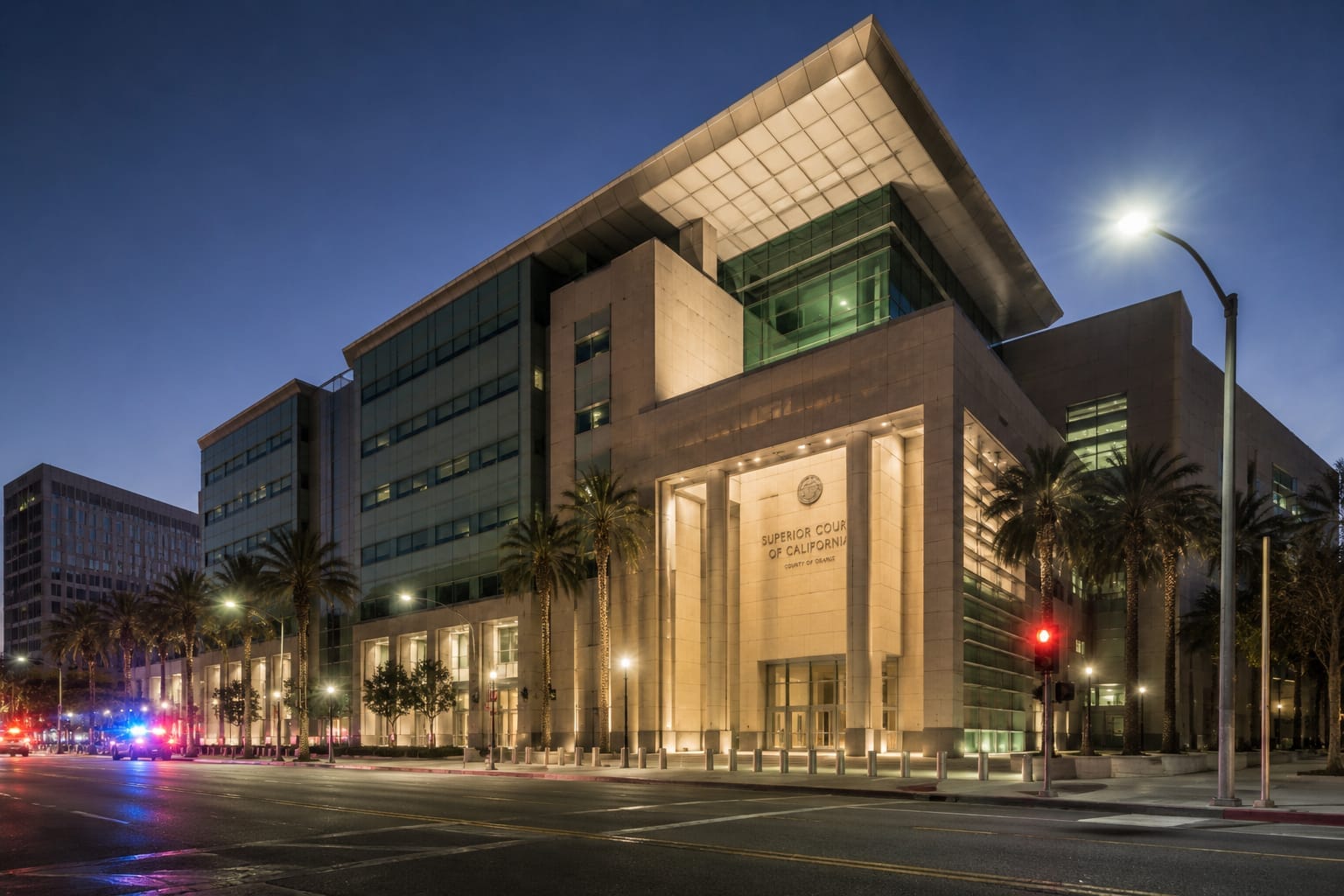
The Law Office of Richard Wagner, A Professional Corporation, defends felony DUI and DUI causing injury clients throughout Orange County and is ready to fight for you.
Felony DUI Lawyer Orange County
A felony DUI in Orange County is one of the most serious criminal charges you can face. A conviction can mean state prison, a strike on your record under California’s Three Strikes Law, and consequences that follow you for the rest of your life. If you need a felony DUI lawyer in Orange County, DUI Lawyer Orange County Richard Wagner is a former Los Angeles DUI prosecutor who knows exactly how the prosecution builds felony DUI cases and how to fight back aggressively. Call (714) 721-4423 for a free, confidential consultation.
When Is a DUI a Felony in California?
Most DUI arrests in California are charged as misdemeanors. However, under California law a DUI is charged as a felony in four specific situations:
- DUI causing injury: Under Vehicle Code Section 23153, a DUI that causes bodily injury to another person can be charged as a felony.1
- Fourth DUI within 10 years: Under Vehicle Code Section 23550, a fourth DUI conviction within 10 years is automatically charged as a felony regardless of whether any injury occurred.2
- Prior felony DUI conviction: Under Vehicle Code Section 23550.5, any subsequent DUI is charged as a felony if the defendant has a prior felony DUI conviction on record.3
- Vehicular manslaughter while intoxicated: Under Penal Code Section 191.5, causing the death of another person while driving under the influence is charged as a felony. Learn more about vehicular manslaughter defense in Orange County.4
If you are facing any of these charges, contact DUI Lawyer Orange County Richard Wagner immediately. Call (714) 721-4423 for a free consultation.
DUI Causing Injury Under Vehicle Code 23153
The most common felony DUI charge in Orange County is DUI causing injury under Vehicle Code Section 23153.1 To convict you, the prosecution must prove all of the following beyond a reasonable doubt:
- You were driving under the influence of alcohol or drugs
- You violated a traffic law or acted negligently while driving
- That violation or act of negligence caused bodily injury to another person
The causation element is often the most contested part of a felony DUI case. Attorney Wagner scrutinizes every aspect of the accident investigation to challenge whether your driving actually caused the injury or whether other factors were responsible. Learn more about how BAC evidence is used in DUI cases and how it can be challenged.
What qualifies as injury in a DUI case?
California courts interpret injury broadly in DUI cases. A visible wound or hospitalization is not required. Claims of pain, soreness, stiffness, or physical discomfort have all been deemed sufficient for prosecutors to file felony charges. This low threshold means that even minor accidents can result in felony charges if someone reports any physical complaint. The strength of the injury allegation directly affects the severity of the charges and sentencing exposure.
Great Bodily Injury Enhancements Under Penal Code 12022.7
If the injury caused is deemed great bodily injury (GBI) under Penal Code Section 12022.7, additional years are added to the prison sentence on top of the base felony DUI sentence:5
- Standard GBI enhancement: 3 additional years in state prison
- GBI to a person 70 years of age or older, or GBI causing paralysis or brain damage: 5 additional years in state prison
- GBI to a child under 5 years of age: 4, 5, or 6 additional years in state prison
- Additional injured victims: 1 additional year per injured victim beyond the first, up to a maximum of 3 additional years
A GBI enhancement also converts the offense into a serious and violent felony under California law, triggering strike status under the Three Strikes Law. A strike conviction affects every future criminal case and can dramatically increase sentencing if you are ever convicted of another felony in the future.
Penalties for Felony DUI Causing Injury in Orange County
The penalties for a felony DUI causing injury conviction depend on whether the court grants probation and whether GBI enhancements apply.
If probation is granted (first felony DUI offense)
- Fines: $390 to $1,000 plus penalty assessments and surcharges totaling several thousand dollars
- Jail: 5 days to 1 year in county jail6
- DUI school: First Offender Program or 18 to 30-month program depending on circumstances
- License suspension: 1-year suspension through the DMV7
- Ignition Interlock Device: Required for 12 months on all vehicles you drive8
- Restitution: Full restitution to the injured party for medical expenses, lost wages, and other losses
- Vehicle impoundment: Possible impoundment for up to 6 months
If probation is denied
- County jail: 90 days to 1 year in county jail, or
- State prison: 16 months, 2 years, or 3 years in state prison6
- GBI enhancement: Additional 3 to 6 years depending on the severity of injury and victim circumstances5
- Additional victims: 1 additional year per additional injured victim up to 3 years5
If you have a prior DUI causing injury or vehicular manslaughter conviction, you face significantly enhanced sentencing. The prior conviction triggers mandatory prison time and removes judicial discretion on probation. Learn more about how prior convictions affect second DUI offense sentencing in Orange County.
Fourth DUI Offense Under Vehicle Code 23550
A fourth DUI conviction within a 10-year lookback period is automatically charged as a felony under Vehicle Code Section 23550,2 even if no injury occurred. The penalties include:
- State prison: 16 months, 2 years, or 4 years
- Felony probation: With possible county jail time as a condition of probation
- DUI education program: 18 to 30-month licensed program
- Ignition Interlock Device: Required for up to 3 years8
- License revocation: Up to 4 years7
- Habitual Traffic Offender (HTO) designation: A 3-year designation that results in additional penalties for any subsequent traffic violations9
Learn more about how a third DUI offense differs from a fourth in terms of mandatory penalties and felony exposure.
How a Felony DUI Defense Attorney Can Help
A felony DUI charge is not the same as a misdemeanor DUI. The investigation is more complex, the stakes are significantly higher, and the prosecution brings more resources to bear. Attorney Wagner builds a comprehensive defense strategy that addresses every element of the charge:
- BAC challenge: Breath and blood test results can be challenged on the basis of improper calibration, chain of custody errors, contamination, fermentation, or failure to follow California Code of Regulations Title 17 procedures. Learn more about chemical testing in DUI cases.
- Causation challenge: The prosecution must prove your driving caused the injury. Pre-existing conditions, actions of the other driver, road hazards, or mechanical failures can all break the chain of causation.
- Injury challenge: The severity and legitimacy of the alleged injury can be contested through independent medical evaluation and expert testimony.
- Traffic stop challenge: If the officer lacked reasonable suspicion to stop your vehicle, all evidence obtained after the stop may be suppressed. Learn more about improper searches and your rights.
- GBI enhancement challenge: The GBI allegation can be contested if the injury does not meet the legal threshold for great bodily injury.
- Accident reconstruction: Attorney Wagner works with private investigators and expert accident reconstructionists to counter police narratives and insurance company findings.
- Charge reduction negotiation: When the evidence supports it, Attorney Wagner negotiates aggressively for reduction to misdemeanor DUI, wet reckless, or other charges that avoid felony conviction and strike status.
- Alternative sentencing: Even when conviction is unavoidable, Attorney Wagner argues for alternatives to traditional custody including house arrest, electronic monitoring, SCRAM, inpatient treatment, work furlough, or work release.
Time-Sensitive Investigation in Felony DUI Cases
In felony DUI injury cases, the investigation must begin immediately. Evidence disappears quickly and the prosecution begins building its case from the moment of arrest. Attorney Wagner acts fast to preserve:
- Surveillance and traffic camera footage: Video evidence from nearby cameras is often overwritten within days of an accident
- Vehicle black box data (EDR): Event Data Recorder information records speed, braking, and other vehicle data in the seconds before impact
- GPS, dash cam, and in-car audio and video: Any onboard data from either vehicle
- Eyewitness accounts: Witness memories fade and contact information becomes unavailable quickly
- Accident scene conditions: Road conditions, traffic control devices, skid marks, and debris fields change rapidly after an accident
Attorney Wagner works with private investigators and expert accident reconstructionists to counter police narratives and insurance company findings. In felony DUI cases, the defense investigation must be as thorough as the prosecution’s.
Consequences Beyond Prison
A felony DUI conviction carries consequences that extend far beyond the criminal sentence. You may face:
- Long-term license revocation: A felony DUI conviction triggers extended or permanent license revocation through the DMV. Learn more about license suspension and restricted license options.
- Insurance consequences: A felony conviction results in dramatically higher insurance premiums or loss of coverage entirely
- Employment consequences: Felony conviction can result in job loss, disqualification from licensed professions, and difficulty obtaining future employment. Learn more about how a DUI affects professional licenses in Orange County.
- Immigration consequences: A felony DUI conviction can trigger removal proceedings for non-citizens
- Housing and loan restrictions: Felony convictions affect housing applications, student loans, and other financial opportunities
- Three Strikes consequence: A strike conviction affects all future criminal cases, potentially resulting in doubled sentences or life sentences under the Three Strikes Law
After resolution of a felony DUI case, you may be eligible to pursue DUI expungement in California depending on your sentence and probation terms.10
Why Hire a Felony DUI Lawyer Orange County?
Richard Wagner spent two years as a DUI prosecutor for the City of Los Angeles before dedicating his practice to defense in Orange County. Felony DUI cases are exactly the type of case where prosecutorial experience matters most because these cases involve expert witnesses, complex forensic evidence, and aggressive prosecutors who have handled hundreds of similar cases.
Richard Wagner has seen these cases from both sides of the courtroom. He knows how Orange County prosecutors evaluate felony DUI evidence, where the case is most vulnerable, and how to build a defense strategy that gives you a real chance at avoiding the worst outcomes. He is the DUI Lawyer Orange County clients trust when the stakes are highest. Review his attorney profile, case results, and client reviews.
- Former Los Angeles DUI prosecutor who knows exactly how the prosecution builds felony DUI cases
- Over 27 years defending DUI clients including complex felony cases in Orange County courts
- Named to 2025 and 2026 Super Lawyers for DUI/DWI Defense
- 10.0 AVVO Rating — Superb — and 5-star Google and Yelp reviews
- Works with expert accident reconstructionists, forensic toxicologists, and private investigators
- Free, confidential consultations for all felony DUI cases in Orange County
Call: (714) 721-4423 to schedule your free consultation with a former DUI prosecutor who has defended felony DUI cases in Orange County for over 27 years.
Other DUI Related Resources:
- DUI First Offense Defense in Orange County
- DUI Second Offense Defense in Orange County
- DUI Third Offense Defense in Orange County
- Vehicular Manslaughter Defense in Orange County
- Watson DUI Murder Defense in Orange County
- Wet Reckless vs DUI in California
- What is BAC? Blood Alcohol Concentration in California
- California DUI 10-Day Rule
- California DUI Information
- Can I Get A Restricted License After A DUI?
- DUI DMV Hearings
- Refusing Blood and Breath Tests in DUI Cases
- Improper Searches and DUI Defense
- DUI Expungement in California
- DUI and Professional Licenses in Orange County
- Military Diversion for DUI: Veterans and Active-Duty Service Members
- Orange County DUI Courts Guide
- How Long Does a DUI Stay on Your Record
- FAQs
Are You a Veteran Facing Felony DUI Charges?
If you are a veteran or active-duty service member facing felony DUI charges, military diversion under California Penal Code 1001.80 may be available for qualifying charges depending on the specific circumstances of your case. A prior DUI conviction does not automatically disqualify you. Call (714) 721-4423 to discuss your eligibility.
Felony DUI Orange County FAQs
People charged with felony DUI in Orange County arrive at this page scared about prison, their record, and their future. Below are answers to the questions felony DUI clients ask most. If you do not see your question answered here, call (714) 721-4423 for a free, confidential consultation.
Legal References
1 California Vehicle Code Section 23153: Establishes felony DUI causing injury charges. A DUI that causes bodily injury to another person may be charged as a felony under this section.
2 California Vehicle Code Section 23550: Establishes that a fourth DUI conviction within 10 years is automatically charged as a felony regardless of whether any injury occurred.
3 California Vehicle Code Section 23550.5: Any subsequent DUI is automatically charged as a felony if the defendant has a prior felony DUI conviction on record.
4 California Penal Code Section 191.5: Establishes vehicular manslaughter while intoxicated charges when a DUI causes the death of another person.
5 California Penal Code Section 12022.7: Establishes great bodily injury enhancements adding 3 to 6 additional years in state prison depending on the severity of injury and victim circumstances.
6 California Vehicle Code Section 23554: Establishes penalties for felony DUI causing injury including 16 months, 2 years, or 3 years in state prison when probation is denied.
7 California Vehicle Code Section 13352: Establishes DMV license suspension and revocation periods for DUI convictions including felony DUI.
8 California Vehicle Code Section 23575: Establishes ignition interlock device requirements for DUI convictions including felony DUI cases.
9 California Vehicle Code Section 14601.3: Establishes the Habitual Traffic Offender designation triggered by a fourth DUI conviction, resulting in additional penalties for subsequent traffic violations.
10 California Penal Code Section 1203.4: Governs expungement of criminal convictions. A felony DUI conviction may be expunged after successful completion of probation provided no state prison time was served.
11 California Penal Code Section 1001.80: Establishes military diversion as a sentencing alternative for eligible veterans and active-duty service members facing certain criminal charges including DUI.
Richard Wagner Will Fight For You
Priority #1: Zealous Advocacy – Protection Of Your Constitutional Rights
The Law Office of Richard Wagner, A Professional Corporation, has enjoyed years of success defending clients in criminal cases, including: Battery on Police Officer, Battery Against A Spouse, Bench Warrants, Burglary, Disturbing the Peace, Disorderly Conduct, Domestic Violence, Driving on a Suspended License, DUI, Expungements, Forgery, Grand Theft, Hit and Run, Indecent Misdemeanors, Vehicular Manslaughter While Intoxicated Without Gross Negligence, Violation of Protective Order. Richard Wagner is the best drunk driving defense attorney in the Orange County.
Including your Constitutional Right: