

DUI Checkpoints in Orange County
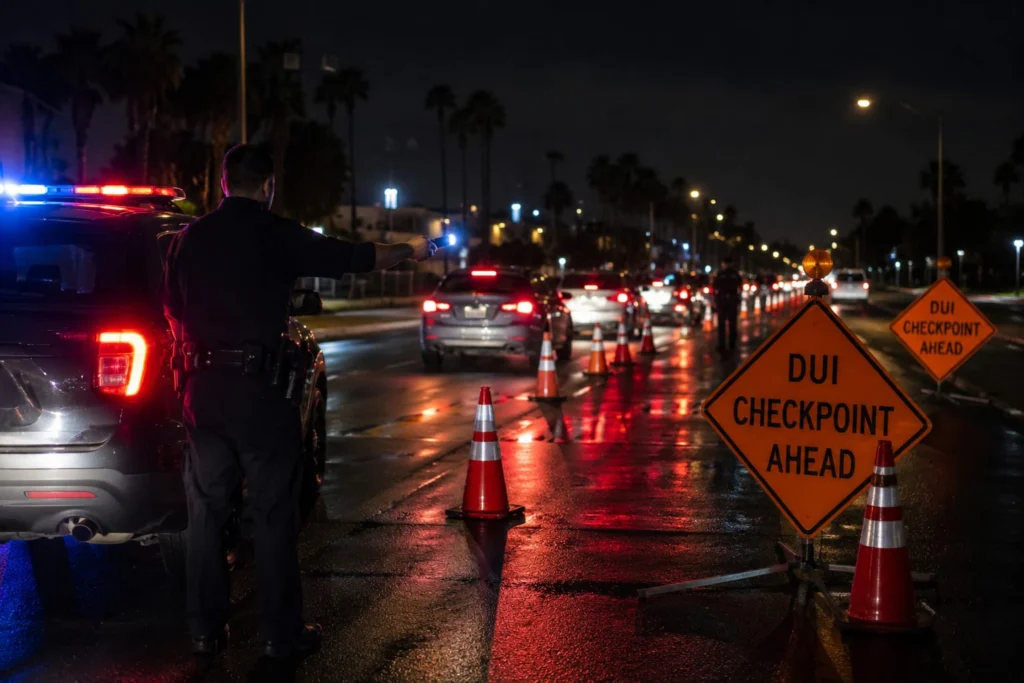
You do not have to perform field sobriety tests or take the roadside breath test at an Orange County DUI checkpoint. Checkpoints feel different from an ordinary traffic stop, the lights, the line of cars, an officer waving you forward, and that atmosphere is exactly why so many drivers forget they still have the same rights they would have anywhere else. Most people comply simply because a checkpoint feels mandatory in a way a regular stop does not.
As an Orange County DUI Lawyer and former Los Angeles prosecutor with more than 27 years defending DUI cases throughout Orange County courts, I want to walk you through how checkpoints actually work across Orange County, what the law requires of police running one, and where checkpoint evidence is most vulnerable to challenge.
“When I got the news that the police department detectives had been to my home and left a note asking me to contact them immediately because I was facing serious charges, I was scared. I am happy that I was referred to you Mr. Wagner. It meant a lot to me that you met with me immediately and were available throughout the case. Your fees were very fair and reasonable and worth every penny!” — J.J., Glendale Read what others have to say
If you or a loved one was arrested for DUI at a checkpoint anywhere in Orange County, understanding your options early is critical. Checkpoint arrests can range from first-time offenses to cases involving refusal of a chemical test, each carrying different consequences. An experienced DUI Lawyer Orange County can evaluate whether the checkpoint itself met constitutional requirements before you decide how to proceed.
DUI Checkpoints in Orange County: Key Takeaways
- Orange County DUI checkpoints are typically funded through California Office of Traffic Safety grants and generally run from early evening into the early morning.
- Checkpoint locations are chosen using collision and DUI arrest data, not at random, and must be clearly marked with lighting and advance signage.
- You are required to provide your license, registration, and proof of insurance when asked. Beyond that, you are not required to answer questions about where you are coming from or what you had to drink.
- Field sobriety tests remain voluntary at a checkpoint, exactly as they are at any other traffic stop, for drivers 21 and older who are not on DUI probation.
- The roadside PAS breath test is also voluntary for most adult drivers not on probation, separate from the mandatory post-arrest chemical test.
- Making a legal turn or U-turn before reaching a checkpoint is not, by itself, grounds for police to stop you.
- California checkpoints must satisfy eight factors set out by the California Supreme Court. A checkpoint that deviates from these requirements can sometimes be challenged in court.
- Enforcement historically increases around long holiday weekends, including Labor Day, as part of statewide and national impaired driving campaigns.
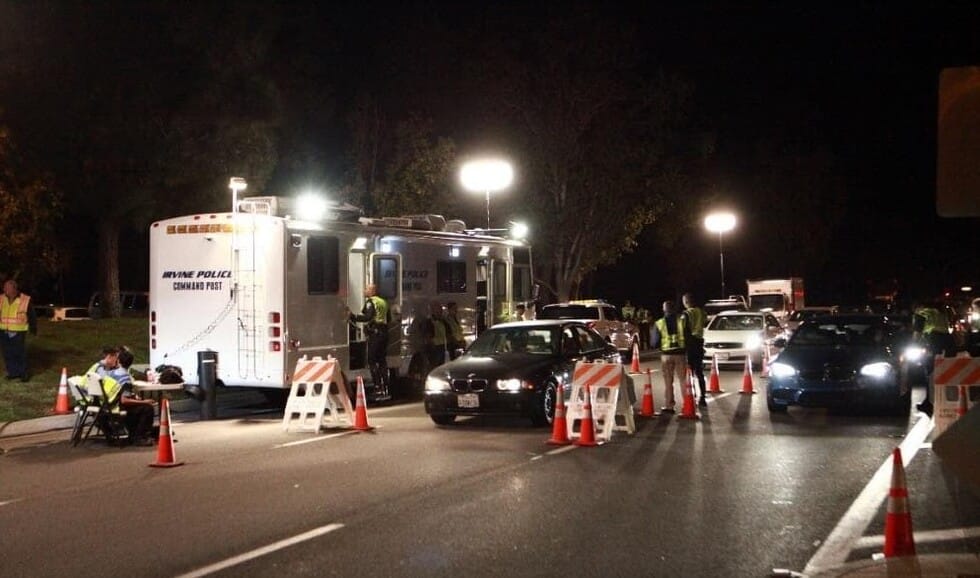
Why Checkpoints Exist: The Numbers Behind the Policy
Checkpoints are not run for their own sake. Law enforcement agencies that run California DUI checkpoints, including departments across Orange County, cite research showing that crashes involving an impaired driver can be reduced by up to 20 percent when checkpoints and proactive DUI patrols are conducted routinely and publicized in advance. That research is the basis for California Office of Traffic Safety grant funding, which underwrites most local checkpoint operations through the National Highway Traffic Safety Administration.
Understanding that policy rationale matters because it explains why checkpoints are legally treated differently from an ordinary stop: their stated purpose is deterrence and public safety, not general criminal investigation, which is the exact distinction courts rely on when evaluating whether a checkpoint is constitutional.
What Actually Happens When You Reach a Checkpoint
Understanding the sequence in advance takes most of the anxiety out of it. Checkpoints are designed to move traffic efficiently for the majority of drivers who show no signs of impairment.
- Approach and initial contact. An officer waves you forward and asks for your license, registration, and proof of insurance. This is the only information you are legally required to provide.
- Brief observation. While reviewing your documents, the officer is also observing you: your speech, your eyes, any odor coming from the vehicle. Most drivers pass through this stage in under a minute.
- Release or referral to secondary screening. If the officer sees nothing suggesting impairment, you are waved through. If they believe they observe signs of impairment, you are directed to a secondary area for further evaluation.
- Secondary screening. This is where field sobriety tests and the roadside PAS breath test may be requested. Both remain voluntary for most adult drivers not on DUI probation. This is also the stage where a DUI investigation and arrest can follow.
The prosecutor can charge you with violating Vehicle Code Sections 23152(a), (b), (c), (f), or (g), and possibly other Vehicle Code offenses, depending on what happens during secondary screening.
Are DUI Checkpoints Legal in California?
California Law: California Supreme Court Rules
DUI Lawyer Orange County Richard Wagner can fight your arrest and detention by filing motions in court based on the Fourth Amendment to the United States Constitution.1
In setting up a checkpoint, the police department must have “implemented procedures designed to provide minimal interference with individual liberties.” There are “functional guidelines for minimizing the intrusiveness of the sobriety checkpoint stop.”2
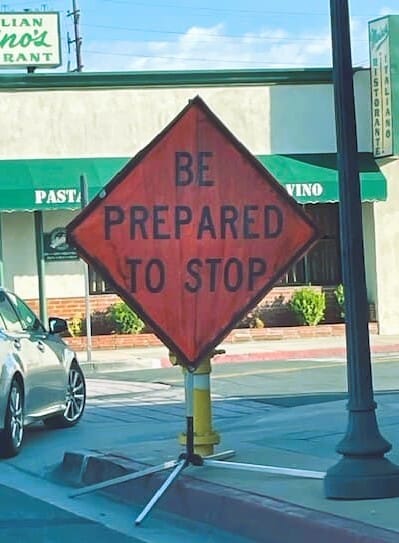
A checkpoint must satisfy eight factors to be constitutional:
(1) Decision-making at the Supervisory Level;
(2) Limits on Discretion of Field Officers;
(3) Maintenance of Safety Conditions;
(4) Reasonable Location;
(5) Time and Duration;
(6) Indicia of Official Nature of Roadblock;
(7) Length and Nature of Detention; and
(8) Advance Publicity.3
As California Supreme Court Justice Broussard stated, “the Fourth Amendment is highly inexpedient to law enforcement … I see no basis for distinguishing a drunken driving roadblock from any other mass detention …”4
Experienced DUI attorneys identify the crucial parts of your defense regardless of your blood-alcohol level or so-called signs of impairment like slurred speech or alleged results on field sobriety tests.
The purpose of the Fourth Amendment is to safeguard the privacy and security of individuals against arbitrary invasions by governmental officials.5
With the right DUI Lawyer Orange County looking for the right evidence in your favor, your attorney can make the case that police officers illegally stopped you at an unconstitutional roadblock and subjected you to a warrantless search and seizure.
The primary purpose of the checkpoint must be to prevent and deter conduct that could injure people or damage property; they are not conventional criminal searches and seizures.6 The United States Supreme Court has “never approved a [DUI sobriety checkpoint] whose primary purpose was to detect evidence of ordinary criminal wrongdoing.”7 Having a secondary purpose of keeping drivers under the influence off the road does not make such a checkpoint Constitutional.8
Your Rights at an Orange County DUI Checkpoint
- You must show your documents. License, registration, and insurance are required. Beyond that, you are not obligated to answer questions about your evening.
- You can decline to answer questions beyond providing your documents. A simple, respectful “Officer, I’d rather not answer that” is enough.
- Field sobriety tests remain voluntary. The walk-and-turn, one-leg stand, and similar tests carry no automatic penalty for declining, checkpoint or not.
- The roadside PAS breath test is voluntary for most drivers 21 and older who are not on probation. Drivers under 21 or currently on DUI probation are required to take it.
- You may make a legal turn before the checkpoint. Avoiding a checkpoint through a lawful turn or U-turn is not, by itself, a valid reason for police to stop you, though officers may still stop you if they separately observe an actual traffic violation.
- The stop itself must be brief for drivers who show no signs of impairment. Checkpoints are designed to minimize delay for the average driver passing through.
From the Prosecution Side: How Checkpoint Arrests Are Built
Checkpoint arrests are different from a typical traffic stop arrest in one important way: there is no driving pattern to point to. No swerving, no speeding, no illegal turn. The entire case usually rests on what the officer observed in a very short window at the driver’s side window, plus whatever happens during secondary screening.
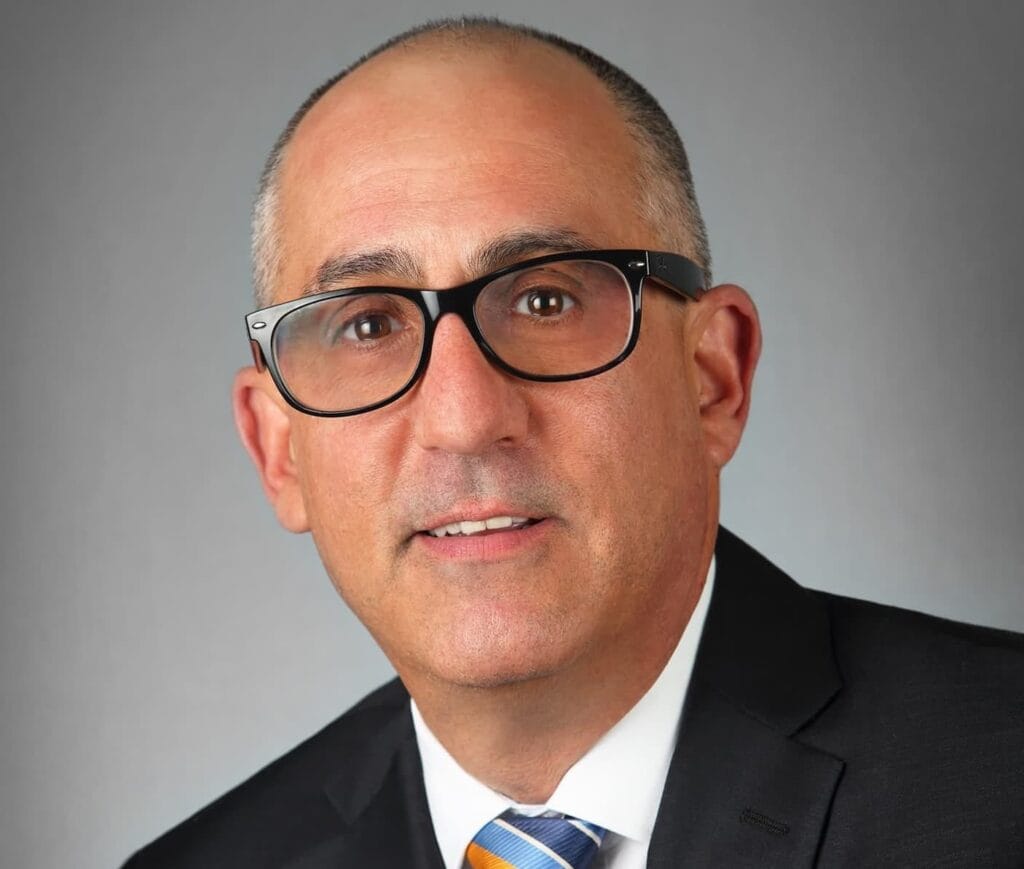
Richard Wagner, former Los Angeles prosecutor and DUI defense attorney with 27+ years of courtroom experience
“Checkpoint cases live or die on a very short window of observation. As a prosecutor I knew that window was thin. As a defense attorney, that’s exactly where I start looking.” — Richard Wagner
Having spent years building DUI cases as a Los Angeles prosecutor before moving to the defense side, I know how checkpoint arrests get written up, what officers are trained to note in that first thirty seconds, and where that documentation tends to fall apart under cross-examination.
Checkpoint Jurisdiction Across Orange County
Every city in Orange County that we serve runs its own DUI checkpoints, coordinated through the California Office of Traffic Safety, and the agency you encounter depends entirely on where you are stopped.
- Santa Ana checkpoints are run by Santa Ana PD, with cases heard at the Central Justice Center.
- Newport Beach and Costa Mesa checkpoints are run by their respective city police departments, with cases heard at the Harbor Justice Center.
- Fullerton and surrounding North County cities checkpoints fall under local PD jurisdiction, with cases heard at the North Justice Center.
- Westminster and West County cities checkpoints are handled locally, with cases heard at the West Justice Center.
- Irvine checkpoints are run by Irvine PD in most of the city, with UC Irvine PD, California State University PD, and Irvine Valley College PD each holding jurisdiction on and around their respective campuses.
- California Highway Patrol runs checkpoints and enforcement along Orange County’s freeway corridors, including the 5, 22, 55, 57, 91, 133, 241, and 405.
Checkpoint locations across the county are consistently chosen using historical DUI arrest and collision data rather than at random, which is why certain corridors see repeated checkpoint activity year over year.
Holiday Enforcement: Why Checkpoints Increase Around Labor Day
Enforcement does not stay flat throughout the year. Checkpoints and DUI saturation patrols tend to increase around major holiday weekends as California participates in the national “Drive Sober or Get Pulled Over” campaign, and agencies countywide receive additional grant funding to staff extra patrols during these windows. Labor Day weekend has historically been one of the higher-enforcement periods of the year, alongside the Fourth of July, New Year’s, and St. Patrick’s Day.
This does not mean a checkpoint is guaranteed on any specific date or corridor. It means the baseline probability of encountering DUI enforcement, whether a checkpoint or a saturation patrol, rises meaningfully during these periods. Planning a sober ride home in advance is always the more reliable strategy than trying to predict a specific checkpoint location.
Are There Any DUI Checkpoints Tonight?
California DUI Checkpoint Locations – DUI Sobriety Checkpoints on Facebook tracks recent checkpoint activity across the state, including Orange County, Los Angeles County, Riverside County, and San Bernardino County.
What Happens If You Are Arrested at a Checkpoint
An arrest at a checkpoint triggers the same two proceedings as any other DUI arrest in Orange County, running on separate tracks and separate timelines.
The Criminal Case
- First offense: Up to 6 months in county jail, $390 to $1,000 in base fines plus significant penalty assessments, 3 to 5 years informal probation, mandatory DUI school, and license suspension
- Second offense within 10 years: Mandatory minimum 96 hours to 1 year in county jail, extended DUI school, longer license suspension, mandatory IID
- Third offense: Mandatory minimum 120 days to 1 year in county jail, 18-month DUI program, potential felony filing under proposed AB 1546
- Felony DUI with injury: State prison exposure and extended probation
The DMV Case: The 10-Day Deadline You Cannot Miss
After any DUI arrest in California, including a checkpoint arrest, you have exactly 10 calendar days to contact the California DMV and request an Administrative Per Se (APS) hearing. Miss that deadline and your license is automatically suspended regardless of what happens in the criminal case.
Before you enter your plea at your arraignment, it is highly recommended that you have a free consultation with DUI Lawyer Orange County Richard Wagner.
The 2026 Legal Landscape: What’s Changed for Checkpoint Cases
California’s DUI enforcement framework has shifted in ways that affect checkpoint arrests just as much as any other DUI stop.
AB 366: Ignition Interlock Device Extension Through 2033
Signed in October 2025 and effective January 1, 2026, Assembly Bill 366 extended California’s statewide Ignition Interlock Device program for qualifying DUI offenders through January 1, 2033. A DUI conviction arising from a checkpoint stop carries the same mandatory IID exposure as any other DUI conviction.
AB 1546: Third DUI as a Felony (Proposed)
Under proposed AB 1546, a third DUI conviction within 10 years could be charged as a felony even without a prior injury. If enacted, this raises the stakes significantly for repeat checkpoint arrests.
➡️ See our related post: California’s New DUI Bills in 2026
Possible Defenses in a Checkpoint DUI Case
- Challenging whether the checkpoint followed constitutional guidelines. Improper site selection, inadequate signage, insufficient supervisory approval, or excessive officer discretion in choosing which vehicles to screen can all be grounds to challenge evidence gathered at the stop.
- Challenging the officer’s brief observation. A short window of contact under artificial lighting, often with traffic backed up behind you, is inherently limited, and that limitation can be used to question how reliable the officer’s impairment assessment really was.
- Challenging field sobriety test administration, if tests were performed, including whether standardized instructions and scoring criteria were followed.
- Challenging the chemical test results, including calibration and maintenance records for the breath testing device used and chain-of-custody documentation for any blood sample.
- Wet reckless reduction, in cases where the evidence is borderline. Learn more about wet reckless vs. DUI.
Frequently Asked Questions
Can I turn around before reaching a DUI checkpoint?
Yes, as long as the turn itself is legal. A lawful turn or U-turn to avoid a checkpoint is not, by itself, grounds for police to stop you. Officers can still stop you if they separately observe an actual traffic violation.
Do I have to answer questions at a DUI checkpoint?
No. You are required to provide your license, registration, and proof of insurance. Beyond that, you are not required to answer questions about where you have been or whether you have been drinking.
Are field sobriety tests mandatory at a checkpoint?
No. Field sobriety tests are voluntary in California, whether at a checkpoint or a regular traffic stop, for drivers 21 and older who are not on DUI probation.
Which agencies run DUI checkpoints in Orange County?
Each city typically runs checkpoints through its own police department, with CHP covering the county’s freeway corridors. Irvine also has UC Irvine PD, California State University PD, and Irvine Valley College PD holding jurisdiction on and around their respective campuses.
Is it true that DUI checkpoints increase around Labor Day?
Enforcement does tend to increase around major holiday weekends, including Labor Day, as part of statewide and national impaired driving campaigns. Planning a sober ride home is always the safer approach during high-enforcement periods.
Can a checkpoint stop itself be challenged in court?
Yes, in some circumstances. California checkpoints must follow the procedural guidelines above, including supervisory approval, limited officer discretion, adequate safety measures and signage, and minimal detention length. A checkpoint that deviates meaningfully from these requirements can sometimes have evidence gathered there challenged or suppressed.
What should I do if I’m arrested at a checkpoint?
Stay respectful, avoid volunteering information beyond your documents, and contact a DUI defense attorney as soon as possible. You have only 10 calendar days to request a DMV hearing.
Orange County DUI Defense Representation
Written and reviewed by Richard Wagner, a former Los Angeles prosecutor and highly respected Orange County DUI & criminal defense attorney, representing clients throughout Irvine, Newport Beach, Costa Mesa, Santa Ana, Anaheim, Orange, Mission Viejo, Huntington Beach, Fullerton, Westminster, and Tustin. With over 27 years of experience defending DUI cases in Orange County courts, Attorney Wagner personally handles every case from consultation through resolution.
You are invited to meet with DUI Lawyer Orange County Richard Wagner for a free, no-cost consultation and case evaluation to explore your options for fighting a DUI arising from a checkpoint stop.
Highly Rated and Reviewed DUI Defense Attorney
- 2025–2027 Southern California Super Lawyers Criminal Defense: DUI/DWI
- Top 100 Lawyers by National Trial Lawyers
- Top One Percent Attorneys by the National Association of Distinguished Counsel
- Superb Attorney Rating 10.0/10.0 and 5-Star Reviews on AVVO
- 5-Star Reviews on Google
- 5-Star Reviews on Yelp
Related Reading
- Tips For Surviving a DUI Checkpoint
- Driving Under the Influence of Marijuana
- California DUI Information
- Field Sobriety Tests
- DMV Hearing Attorney
- Irvine DUI Defense Attorney
- California’s New DUI Bills in 2026
Disclaimer
This article is for informational purposes only and does not constitute legal advice. Checkpoint schedules and enforcement patterns are set independently by law enforcement agencies and are subject to change. If you were arrested for DUI at a checkpoint in Orange County, consult a qualified attorney about your specific situation.
Legal Authorities
The information in this article is based on California statutes, enacted legislation, case law, and published law enforcement and traffic safety guidance governing DUI checkpoints and driver rights in California. Sources include the California Legislative Information portal, the California DMV, the California Office of Traffic Safety, the National Highway Traffic Safety Administration, and published California and United States Supreme Court decisions.
1 “The right of the people to be secure in their persons, houses, papers, and effects, against unreasonable searches and seizures, shall not be violated . . . .” U.S. Const. amend. IV.
2 Ingersoll v. Palmer, (1987) 43 Cal. 3d 1321, 1341-1346.
3 “…the United States Supreme Court’s subsequent decision in [Michigan State Police Dept. v. Sitz, (1990) 496 U.S. 444] demonstrates that advance publicity is not a constitutionally required prerequisite.” People v. Banks, (1993) 6 Cal. 4th 926, 935; But see Ingersoll v. Palmer (1987) 43 Cal. 3d 1321, 1336, in which the Court noted “the sobriety checkpoints received substantial advance publicity…”
4 Ingersoll v. Palmer, (1987) 43 Cal. 3d 1321, 1356.
5 Camara v. Municipal Court of the City and County of San Francisco (1967) 387 U.S. 523, 528.
6 Ingersoll v. Palmer, (1987) 43 Cal. 3d 1321, 1331.
7 City of Indianapolis v. Edmond, (2000) 531 U.S. 32, 41.
8 City of Indianapolis v. Edmond, (2000) 531 U.S. 32, 46 (“Petitioners argue that the Indianapolis checkpoint program is justified by its lawful secondary purposes of keeping impaired motorists off the road and verifying licenses and registrations. If this were the case, however, law enforcement authorities would be able to establish checkpoints for virtually any purpose so long as they also included a license or sobriety check.”)
California Vehicle Code § 23152 (Driving Under the Influence)
California Vehicle Code § 23612 (Implied Consent Law)
Assembly Bill 366 (IID Extension Through 2033)
Assembly Bill 1546 (Third DUI as Felony, Proposed)
Laws are subject to interpretation, enforcement discretion, and future amendment. Application of these statutes may vary depending on the facts of each individual case.
Call Now: 714-721-4423 or Text: 714-403-6317, or schedule a free consultation with a DUI Lawyer Orange County drivers trust.