
Top 30 DUI FAQs

California DUI questions answered by former Los Angeles DUI prosecutor Richard Wagner.

Top 30 California DUI FAQs Answered by Orange County DUI Lawyer Richard Wagner

These are the top 30 California DUI FAQs that drivers in Irvine and across Orange County ask former Los Angeles DUI prosecutor Richard Wagner, from the 10-day DMV deadline and test refusals to penalties, expungement, and what a DUI lawyer costs. For questions about bail, plea deals, and your rights in court, see our Orange County criminal court FAQs.

After a DUI Arrest and the DMV
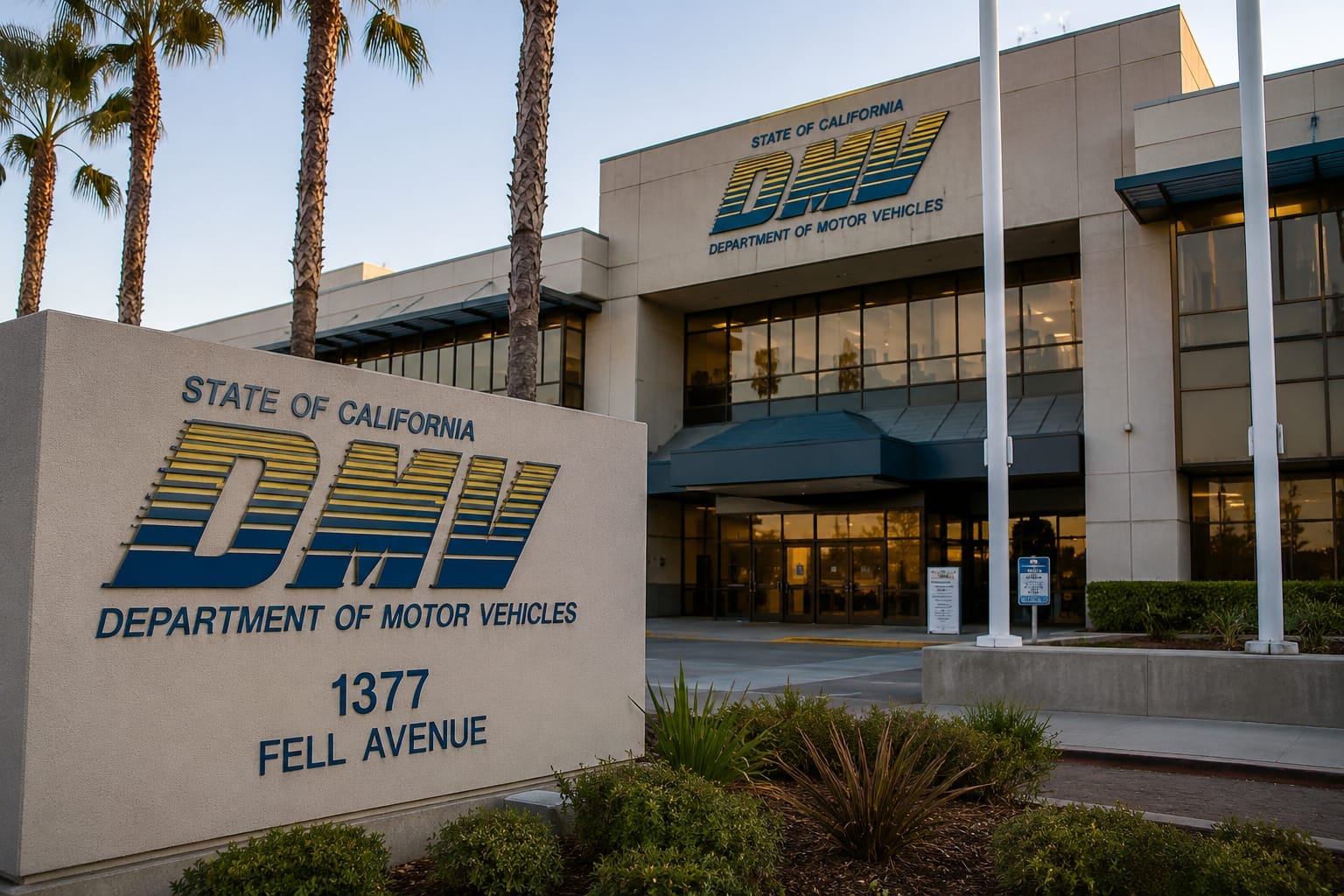
California DMV office where drivers request a DUI hearing within 10 days of arrest

After a DUI arrest in Orange County, the officer usually takes your license and gives you a pink temporary license (form DS 367), which is also your notice that your license will be suspended in 30 days. You have only 10 days from the arrest to request a DMV hearing, or the suspension takes effect automatically. Separately, you will get a court date for your arraignment.

Do not discuss the case with anyone but your lawyer, keep all of your paperwork, and write down what you remember about the stop. Learn what happens after a DUI arrest in Orange County.

You must contact the DMV Driver Safety Office within 10 days of the arrest, as required by Vehicle Code 13558. Your lawyer can request the hearing for you and ask the DMV to stay the suspension while the hearing is pending.

The hearing is limited to three issues: whether the officer had reasonable cause to stop you, whether you were lawfully arrested, and whether your BAC was 0.08% or higher (or whether you refused testing). Learn more about DMV hearings in DUI cases.

Often, yes. Many drivers qualify for a restricted license: an ignition interlock (IID) restricted license that allows driving anywhere in a vehicle with an IID installed, or, for some first offenses, a restricted license limited to driving to work and to your DUI program.

A chemical test refusal generally means no restricted license during the refusal suspension, and drug-only DUIs are not eligible for an IID restricted license. Learn more about restricted licenses after a DUI.

An IID is a breath-testing device wired to your car’s ignition. The car will not start if it detects alcohol, and it asks for random retests while you drive.

Under Vehicle Code 23575.3, a first-offense DUI without injury can choose an IID to keep driving with a restricted license, while repeat offenses require one: 12 months for a second DUI, 24 months for a third, and 36 months for a fourth.

DUI Testing

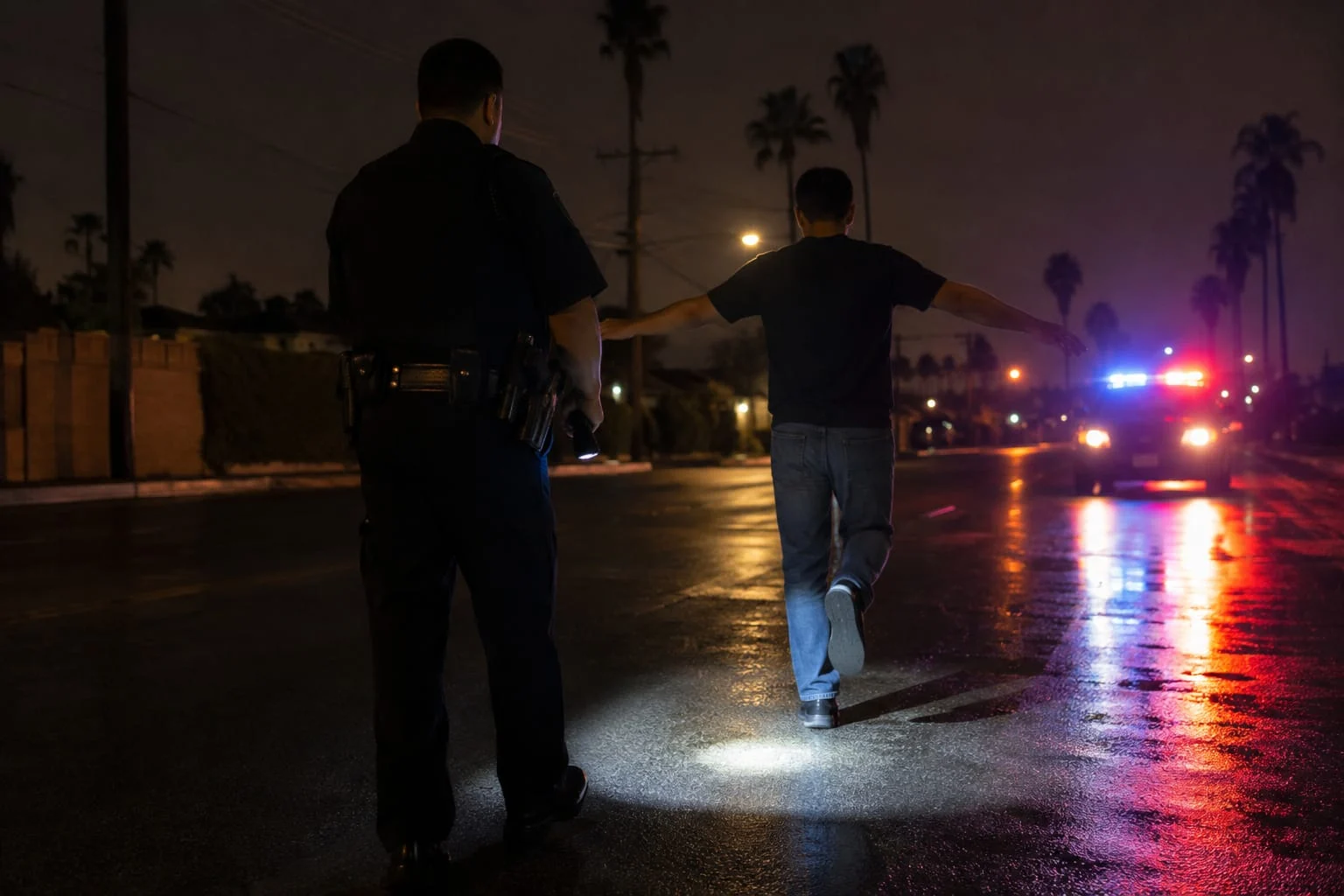
Officer giving a field sobriety test during a nighttime DUI stop in Orange County

BAC is the percentage of alcohol in your blood. In California it is illegal to drive with a BAC of 0.08% or higher, 0.04% or higher in a commercial vehicle, and 0.01% or higher if you are under 21. You can also be charged with DUI below 0.08% if prosecutors claim you were impaired.

A BAC of 0.15% or higher is an aggravating factor at sentencing, and 0.20% or higher usually means a longer DUI program. Breath results can be challenged, for example when the test was taken during the absorptive phase. Learn more about BAC.

No. Field sobriety tests such as the walk-and-turn, one-leg stand, and horizontal gaze nystagmus are voluntary, and you can politely decline them. The handheld roadside breath test (PAS) is also voluntary if you are 21 or older and not on DUI probation.

The chemical breath or blood test after a lawful arrest is different, and refusing it has serious consequences. Learn more about field sobriety tests.

Under California’s implied consent law (Vehicle Code 23612), refusing a breath or blood test after a lawful DUI arrest leads to a one-year license suspension for a first refusal, with no restricted license, and a two- or three-year revocation for repeat refusals.

If you are convicted of DUI, the refusal can add jail time, and prosecutors can argue it shows consciousness of guilt. A lawyer can challenge whether the arrest was lawful and whether the officer gave a proper refusal advisement.

Yes. Vehicle Code 23152(f) makes it illegal to drive under the influence of any drug, including legally prescribed painkillers, sleep aids, and anxiety medications. A valid prescription is not a defense.

Prosecutors still have to prove the drug actually impaired your driving, which usually depends on a drug recognition evaluation and blood testing that can be challenged. Learn more about drug DUI defense.

Yes. Even though cannabis is legal, driving while impaired by THC is not. California has no legal THC limit, and THC can stay in your blood long after its effects wear off.

That means prosecutors must rely on officer observations and expert testimony, which a knowledgeable lawyer can challenge. Learn how police try to prove marijuana impairment.

DUI Charges and Penalties

Orange County Superior Court courtroom where DUI cases are charged and sentenced

A first DUI without injury is a misdemeanor. Penalties typically include three to five years of informal probation, a base fine of $390 to $1,000 (roughly $1,500 to $2,500 or more with assessments), a 3, 6, or 9 month DUI program, a 4-month DMV Administrative Per Se suspension, and a 6 or 10 month DMV Mandatory Actions Unit suspension.

A first DUI that injures someone can be charged as either a misdemeanor or a felony. Learn more about first-offense DUIs.

A second DUI within 10 years is usually a misdemeanor, but the penalties increase. They include a minimum of either 96 hours or 10 days, up to one year in county jail, an 18 or 30 month DUI program, a 1-year DMV Administrative Per Se suspension and a 2-year license suspension, a mandatory ignition interlock device for 1 year, 3 to 5 years of informal probation, and fines plus assessments.

Learn more about second-offense DUIs.

A third DUI within 10 years carries 120 days to one year in county jail, an 18 or 30 month DUI program, a 1-year DMV Administrative Per Se suspension and a 3-year license revocation, a 2-year ignition interlock requirement, 3 to 5 years of informal probation, and Habitual Traffic Offender designation. Starting January 1, 2027, a third DUI can be charged as a felony.

Learn more about third-offense DUIs.

A DUI can be charged as a felony when it is a fourth DUI within 10 years, when the driver has any prior felony DUI or a prior conviction for gross vehicular manslaughter while intoxicated (with no time limit), or when someone other than the driver is injured.

A felony DUI can bring state prison time and a longer license revocation. Learn more about felony DUI and DUI with injury.

A DUI that injures someone other than the driver is charged under Vehicle Code 23153 and can be filed as a misdemeanor or a felony. Penalties can include jail or state prison, a longer license suspension, restitution to the victim, and additional prison time if the injury is serious.

Defenses often focus on whether the DUI actually caused the injury and whether the chemical testing was reliable.

A Watson murder is a second-degree murder charge filed when an impaired driver causes a death and prosecutors argue the driver knew how dangerous drunk driving is, usually because of a prior DUI conviction and the warning every convicted driver receives under Vehicle Code 23593.

The name comes from the California Supreme Court case People v. Watson (1981), and the charge carries 15 years to life in prison. Learn more about Watson murder charges.

Often, yes, for a first DUI. A first offense without aggravating factors often resolves with little or no jail beyond the initial booking. Repeat offenses carry mandatory minimum jail time, but Orange County judges can often allow alternatives such as electronic monitoring, house arrest, or work release.

This is where your choice of lawyer matters. Alternatives to jail are up to the judge, and Richard Wagner draws on his years as a Los Angeles DUI prosecutor and more than 27 years of DUI experience, most of it in Orange County courtrooms, to present your record, your work and family obligations, and the facts of your case in the way most likely to persuade the judge to allow an alternative to jail. Call (714) 721-4423 for a free consultation.

Yes, in some cases. A wet reckless is a plea to alcohol-related reckless driving under Vehicle Code 23103.5, usually offered when there are weaknesses in the evidence or the BAC was close to 0.08%.

It carries lighter penalties than a DUI, including a lower base fine of about $145 and a shorter alcohol program, but it still counts as a prior if you are arrested for DUI again within 10 years. Learn more about wet reckless vs. DUI.

California uses the term DUI, for driving under the influence of alcohol, drugs, or both. DWI, short for driving while intoxicated, is the term some other states use for the same offense.

An out-of-state DWI conviction can count as a prior DUI in California if the conduct would be a DUI here.

Court and Defense

Orange County courthouse at night where DUI cases are heard

The arraignment is your first court date, where you are told the charges and enter a plea. In most misdemeanor DUI cases, your lawyer can appear for you, although the judge may require you to attend. Learn more about arraignments in California.

For more on bail, plea deals, missed court dates, and your rights in court, see our Orange County criminal court FAQs.

Most misdemeanor DUI cases in Orange County resolve in three to six months, usually over several pretrial hearings. Cases that go to trial, involve injury, or require expert testing can take a year or longer.

Richard Wagner does not drag cases out to make it look like more work is being done. He knows how stressful it is to have a DUI case hanging over your head, so he takes the time needed to review the evidence, file the right motions, and negotiate the best result, and no longer. See which Orange County courthouse will hear your case.

Common DUI defenses include an unlawful stop or arrest, problems with breath or blood testing such as calibration errors, contamination, or testing during the absorptive phase, improperly given field sobriety tests, medical conditions that mimic impairment, and illegal searches.

The right defense depends on the evidence in your case. Learn more about DUI defense in Orange County.

Police only have to give Miranda warnings before a custodial interrogation, not during the initial stop or field sobriety tests. A missing warning does not get a DUI dismissed, but statements you made in custody without one may be suppressed.

Police can search your car with your consent, with probable cause to believe it contains evidence such as open containers or drugs, as part of a search after a DUI arrest when it is reasonable to believe evidence of the DUI is in the car, or as an inventory search if the car is impounded.

If officers searched without a valid reason, your lawyer can file a motion to suppress the evidence. Learn more about improper searches.

Your Record, Insurance, and Job

Car keys and a calendar marking court dates after a California DUI

A DUI stays on your California DMV driving record for 10 years, and a new DUI within 10 years of a prior offense date is charged as a repeat offense. On your criminal record, a DUI conviction stays permanently unless it is expunged, and even an expunged DUI still counts as a prior for 10 years.

Learn more about how long a DUI stays on your record.

Usually, yes. Once you complete probation, or the court ends it early, you can petition under Penal Code 1203.4 to withdraw your plea and have the case dismissed.

Most private employers can no longer consider an expunged conviction, but it still counts as a prior DUI for 10 years, stays on your DMV record, and must be disclosed on some state licensing applications. Learn more about DUI expungement.

If you were arrested but not convicted, for example because charges were never filed, the case was dismissed, or you were acquitted, you can petition to seal the arrest record under Penal Code 851.91. If you can show you are factually innocent, Penal Code 851.8 allows the record to be sealed and destroyed.

A DUI usually raises insurance premiums significantly for several years, and some insurers will cancel or decline to renew a policy.

To reinstate your license, your insurer must file an SR-22, a certificate proving you carry California’s minimum liability coverage, and it must stay on file with the DMV for three years. If the policy lapses, the DMV is notified and can suspend your license again.

Yes. A DUI conviction appears on criminal background checks and on your DMV driving record, which employers who hire drivers often review. California’s Fair Chance Act limits when most employers can ask about convictions, and an expungement generally keeps private employers from considering the conviction, but government agencies and licensing boards can still see it.

Learn more about DUI and professional licenses.

Hiring an Orange County DUI Lawyer

Orange County DUI attorney reviewing a case with a client

In Orange County, DUI lawyers typically charge between $1,500 and $10,000 for a full DUI defense, and many offer flat fees of $3,500 to $10,000. The cost depends on the lawyer’s experience, whether the case involves injury or prior offenses, and whether it goes to trial or needs expert witnesses.

Learn more about what a DUI lawyer costs in Orange County.

A local Orange County DUI lawyer knows the four justice centers, the judges, and the prosecutors, and how each courtroom tends to handle DUI cases and plea offers. That experience helps when negotiating reduced charges and alternative sentences.

Richard Wagner has more than 27 years of DUI experience and appears at all four Orange County courthouses. Learn more about Richard Wagner.

Need Help Now?

Facing DUI charges in Orange County or Irvine? Call (714) 721-4423 or request a free consultation with The Law Office of Richard Wagner.

Legal References and Statutory Authority

The California DUI Look-Back Period: Vehicle Code Sections 23540 and 23546

In California, the 10-year look-back period for prior DUI convictions is measured from offense date to offense date, not from the conviction date. The time between the dates each DUI occurred, not when you were convicted, decides whether a new DUI is treated as a repeat offense.

The statutory language confirming this rule appears in the California Vehicle Code:

California Vehicle Code §23540: Second Offense
“If a person is convicted of a violation of Section 23152 and the offense occurred within 10 years of a separate violation of Section 23103, as specified in Section 23103.5, 23152, or 23153, that resulted in a conviction, that person shall be punished…”

California Vehicle Code §23546: Third Offense
“If a person is convicted of a violation of Section 23152 and the offense occurred within 10 years of two separate violations of Section 23103, as specified in Section 23103.5, 23152, or 23153, or any combination thereof, that resulted in convictions, that person shall be punished…”

This plain language confirms that the 10-year period for DUI enhancements in California is measured by the dates of the offenses themselves, not by when the cases are resolved or convictions entered, and it is how the rule is applied in Orange County DUI courts.

Disclaimer: The information on this page is for general informational purposes only and does not constitute legal advice. For advice about your situation, contact The Law Office of Richard Wagner, APC, at (714) 721-4423.

Former Los Angeles DUI Prosecutor Defending Orange County Drivers

Priority #1: Zealous Advocacy and Protection of Your Constitutional Rights

The Law Office of Richard Wagner, A Professional Corporation, focuses primarily on DUI defense. Wagner spent two years as a Los Angeles DUI prosecutor and has more than 27 years of DUI experience, most of it defending the same types of cases in Orange County courts and at DMV hearings.

  • Former Los Angeles DUI Prosecutor
  • 27+ Years of DUI Experience
  • All Four Orange County Superior Court Locations
  • Criminal & DMV Hearing Representation

If you have been arrested for driving under the influence, call (714) 721-4423 for a free consultation with an experienced Orange County DUI attorney.

Including your Constitutional Rights:

  • to be represented by a California criminal defense attorney throughout all stages of the proceedings,

  • to produce evidence and witnesses on your own behalf,

  • against self-incrimination,

  • to testify on your own behalf,

  • to confront and cross-examine witnesses,

  • to a jury trial, where you would be presumed innocent, and could not be convicted unless 12 impartial jurors were convinced of your guilt beyond a reasonable doubt.

Orange County Drunk Driving Lawyer, Protecting Your Constitutional Rights